Vaccinations and Parasite Control
Work with a local large-animal veterinarian to tailor a vaccination schedule to your region.
In most areas, a basic annual vaccination program includes:
- IBR, BVD, PI3, BRSV: respiratory protection
- Leptospirosis: annual or every six months in warm climates
- Clostridial 7-Way (Blackleg): once yearly
- Vibriosis: 30–60 days before breeding
- Brucellosis: for heifers between 4–12 months (required in many states)
For deworming, rotate products seasonally and test fecal samples yearly to avoid resistance. Minis usually require smaller doses—dose by accurate weight, not by guesswork
Hoof and Coat Care
Highlands grow strong hooves naturally on firm ground, but periodic trimming prevents cracks or uneven wear—especially on soft or wet soils. Schedule trimming once times per year, depending on terrain.
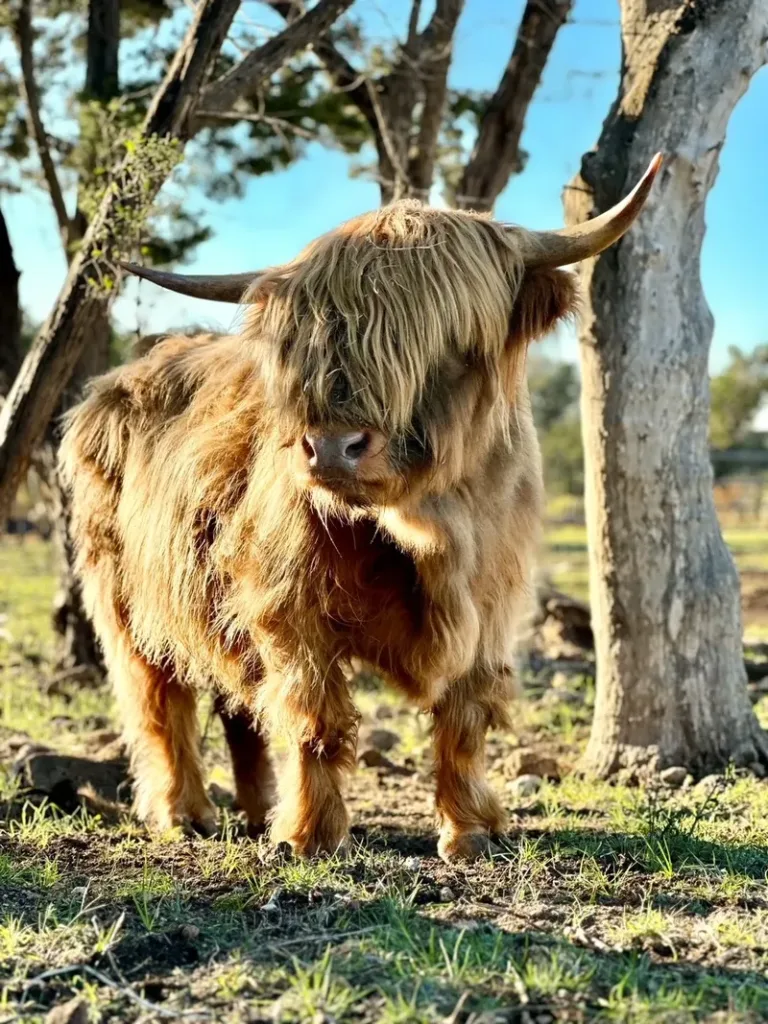
Their heavy coats shed seasonally. Brushing helps remove old hair, improve circulation, and strengthens the bond between cattle and handler. During extreme heat, provide shade and airflow to prevent overheating.
Calf and Bottle Care
Newborn calves need colostrum within the first few hours of life. Colostrum provides essential antibodies that build immunity. If a calf is too weak to nurse, use stored or commercial colostrum replacer as soon as possible.
For bottle calves:
- Feed warmed milk or replacer at 101–105°F, twice daily.
- Offer clean water and calf starter within the first week.
- Keep bedding dry and free from drafts.
- Introduce small amounts of hay after 4–6 weeks.
Healthy calves are bright, curious, and quick to rise after feedings.