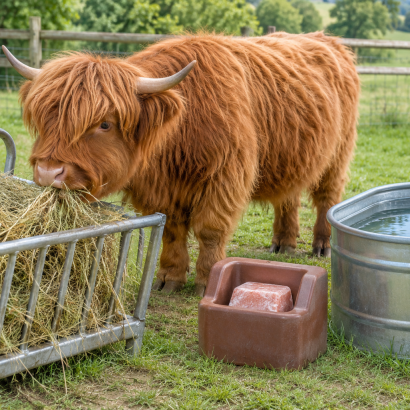
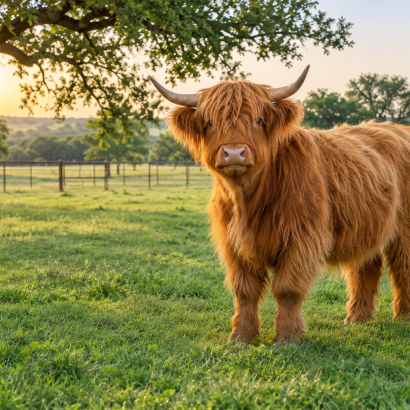
Mini Highland cows attract buyers with their compact size, distinctive coats and calm appearance, but the purchase price is only one part of responsible ownership. A realistic budget should cover the animal, fencing, shelter, feed, routine veterinary care and transport.
What affects the purchase price?
Prices vary according to age, sex, size, conformation, temperament, health history, registration and bloodline. Calves with documented breeding, appropriate health records and careful early handling may cost more than animals with limited background information. Extremely low prices deserve caution: confirm the seller, ask for current photos and records, and never treat a living animal like an impulse purchase.
Start by reviewing our available Mini Highland calves. Each animal should be considered on its own merits rather than by coat colour alone.
One-time setup costs
- Secure fencing: Cattle need strong perimeter fencing and safe gates.
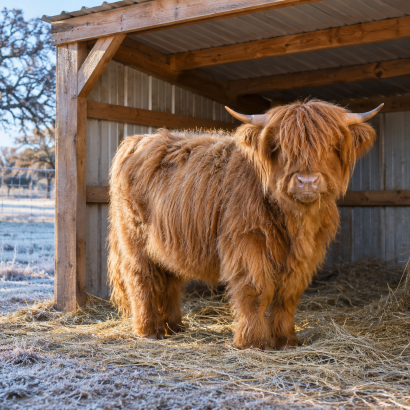
- Shelter: A dry, well-ventilated structure should provide shade and protection from wind and rain.
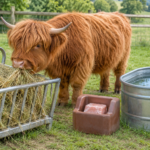
- Water system: Reliable clean water is essential every day.
- Handling area: A safe pen or small corral helps with veterinary visits and routine care.
- Transport: Budget for a suitable livestock trailer or professional delivery.
Ongoing monthly and annual costs
Pasture reduces purchased feed during productive months, but most owners still need hay, minerals and seasonal supplements. Costs rise during drought, winter or when pasture quality falls. Our Mini Highland cow feeding guide explains the basics of forage, minerals and water.
Veterinary expenses include vaccinations, parasite control, hoof care when needed and unexpected treatment. Establish a relationship with a large-animal veterinarian before bringing cattle home. Learn more on our health and care page.
Why keeping two cattle is usually better
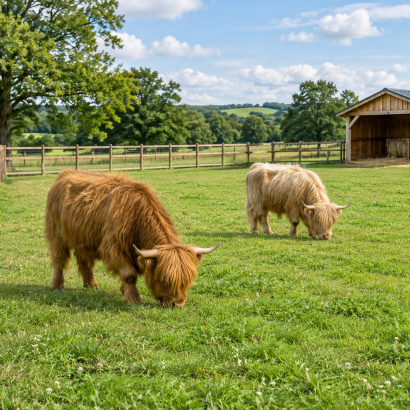
Cattle are herd animals. A single cow can become stressed or overly dependent on people, so many owners plan for at least two compatible animals. That doubles some feed and veterinary costs, although shelter, fencing and equipment can often be shared.
Questions to ask before buying
- What is the animal’s mature-size expectation?
- Are health and vaccination records available?
- How has the animal been handled?
- What feed is it currently receiving?
- What fencing and shelter are already in place?
- Is livestock transport available to your area?
Temperament is especially important for small farms and families. Read our guide to Mini Highland cow temperament and handling before choosing an animal.
Plan for value, not the lowest price
The best purchase is a healthy, correctly represented animal that suits your land, facilities and experience. A careful setup protects the cow and reduces costly problems later. If you are ready to discuss availability, use our contact page to ask about current calves and next steps.