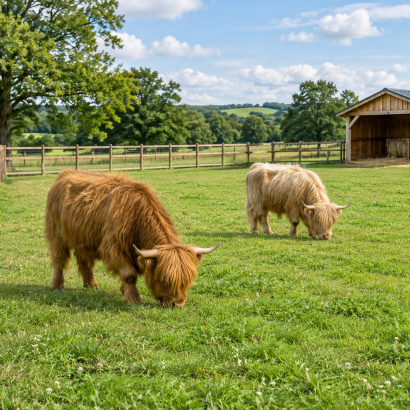
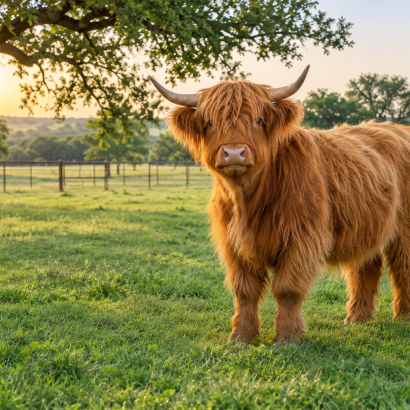
Highland cattle are known for their protective double coat, but mini Highlands still need thoughtful winter management. Texas weather can change quickly, and cold rain, wind and mud may be harder on cattle than a dry cold day.
Provide a dry windbreak
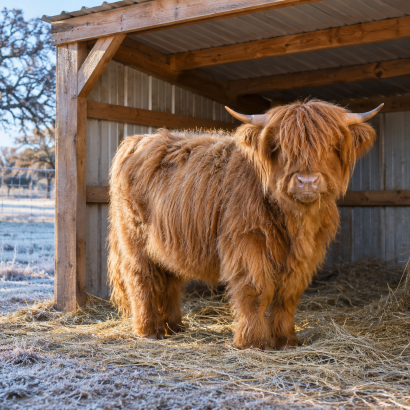
A well-ventilated three-sided shelter or natural windbreak helps animals escape driving rain and strong wind. Keep bedding dry and remove manure regularly. Avoid sealing cattle in a warm, damp building; ventilation helps control moisture and respiratory irritation.
Increase attention to forage
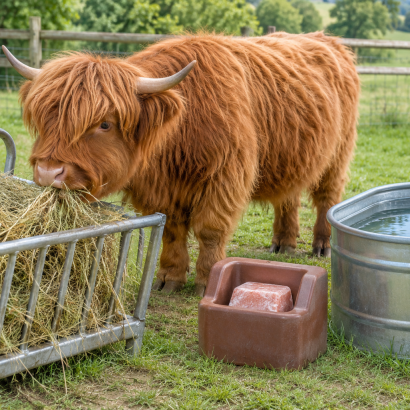
Fermenting forage generates body heat, so adequate hay is central to winter care. Supply clean hay before pasture is depleted and protect stored feed from moisture and mold. Learn the basics in our article, What Do Mini Highland Cows Eat?
Keep water available
Animals may drink less when water is very cold, but dehydration is still a risk. Check troughs morning and evening during freezes. Use safe, livestock-rated heating equipment where necessary and protect electrical connections from animals and weather.
Watch the coat and body condition
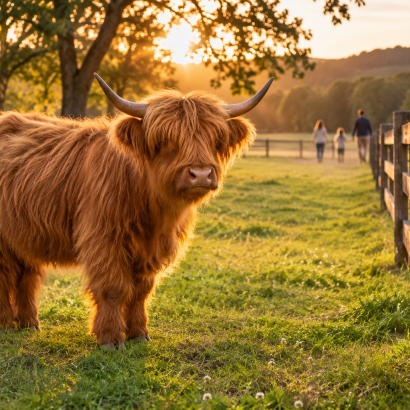
A long coat can make an animal look heavier than it is. Feel over the ribs and spine regularly and record changes. Wet, matted hair loses insulation, so provide a dry resting area. Young calves, older cattle and animals recovering from illness may need additional protection.
Control mud and footing hazards
Move feeders and hay rings before one area becomes deeply churned. Add appropriate footing around high-traffic locations and repair drainage problems. Mud increases hoof problems, wastes hay and makes routine handling more difficult.
Prepare a winter checklist
- Store adequate quality hay.
- Inspect shelters, fencing and gates.
- Protect water supplies from freezing.
- Keep emergency veterinary contacts available.
- Maintain a safe handling area.
- Monitor each animal daily.
Read our full Mini Highland cow health and care guide and confirm your land and pasture plan before winter arrives.
Plan before cold weather
Good winter care begins months in advance with sound nutrition, shelter and healthy cattle. If you are considering ownership, view our available calves and contact us to discuss preparation.