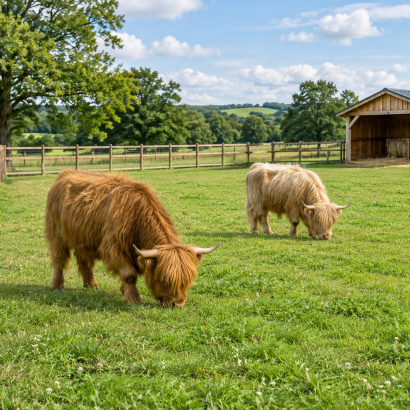
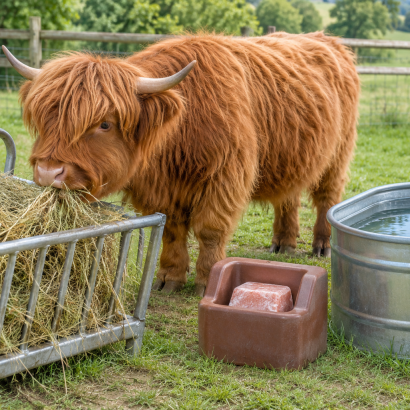
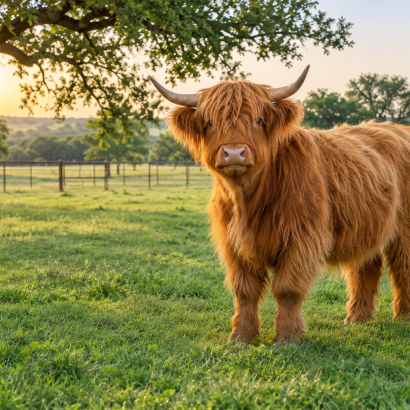
Mini Highland cows are efficient grazers, but their diet still needs careful management. The foundation should be good forage, clean water and a cattle-specific mineral program. Feeding too much grain or changing diets suddenly can create serious health problems.
Forage comes first
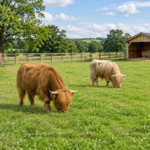
Healthy pasture is ideal during the growing season. When grass is limited, offer clean, properly stored hay that is appropriate for cattle. Hay quality varies, so visual appearance alone is not enough; forage testing can help identify protein, energy and mineral gaps.
Our main Mini Highland cow feeding page provides a simple overview for new owners.
Fresh water every day
Cattle need unrestricted access to clean water. Requirements increase during hot weather, lactation and when animals are eating dry hay. Check troughs daily for algae, leaks, ice, contamination and adequate flow.
Minerals and salt
Offer a loose cattle mineral formulated for your region, along with salt when recommended. Local soils and forage can be deficient or excessive in specific minerals, so work with a veterinarian or livestock nutritionist. Never substitute minerals designed for a different species without professional advice.
Do Mini Highland cows need grain?
Many mature animals in good condition do not need routine grain when quality forage is available. Grain may be used for particular growth, pregnancy or recovery needs, but it should be introduced gradually and measured carefully. Overfeeding concentrates can cause obesity and digestive upset.
Monitor body condition
The Highland coat can hide weight loss or excess fat. Use hands-on body-condition checks around the ribs, spine and tail head. Adjust forage quality and quantity based on the individual animal, life stage and veterinary advice.
Seasonal feeding plan
- Spring: Introduce lush pasture gradually.
- Summer: Prioritize water, shade and drought planning.
- Autumn: Test hay and build adequate winter reserves.
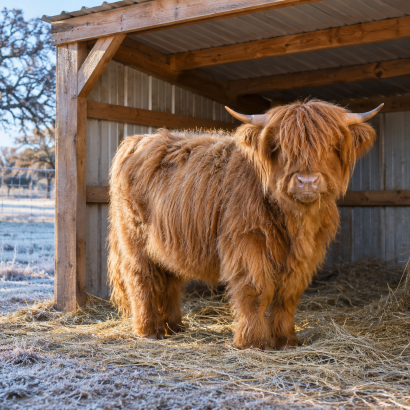
- Winter: Provide enough forage for body heat and monitor condition closely.
For cold-weather planning, read our winter-care guide. You should also review routine health and care before bringing cattle home.
Ask before changing the diet
When buying a calf, request its current feeding routine and transition slowly. See our available calves or contact us with feeding and ownership questions.